Why Real Grower Feedback Matters in Cannabis Breeding
Originally published: 26 July 2017
Last updated: 21 October 2026
Seedstockers was founded in Barcelona in 2017, and the city influenced the company in ways that went far beyond having an office address.
Barcelona already had a large and diverse cannabis community. Growers with very different levels of experience were working with genetics indoors, outdoors, on balconies and in larger cultivation spaces. Breeders, producers, clubs, shops and home growers crossed paths in a way that made it unusually easy to see how cannabis genetics behaved once they left the controlled environment in which they had been selected.
That mattered to us from the beginning.
In the early Seedstockers years, we relied much more heavily on genetics produced by external breeders and specialist seed producers. One of the advantages of being close to growers was that we could see what happened after those seeds were sold. Which varieties were repeatedly successful? Which looked great on paper but disappointed in practice? Which plants performed well for experienced growers but proved unnecessarily difficult for everyone else?
Almost ten years later, Seedstockers does much more of its own breeding, but the value of that feedback has not diminished. If anything, it has become more important.
Breeding tells us what we hope a variety will do.
Growers tell us what it actually does.
A breeding room only tells you part of the story
There is an obvious advantage to testing genetics under controlled conditions.
When temperature, lighting, nutrition, irrigation and environmental conditions are carefully managed, it becomes easier to compare plants and identify genetic differences. Good breeding requires that level of control because otherwise it can become difficult to distinguish genetics from the environment around them.
But that is not how most cannabis is grown.
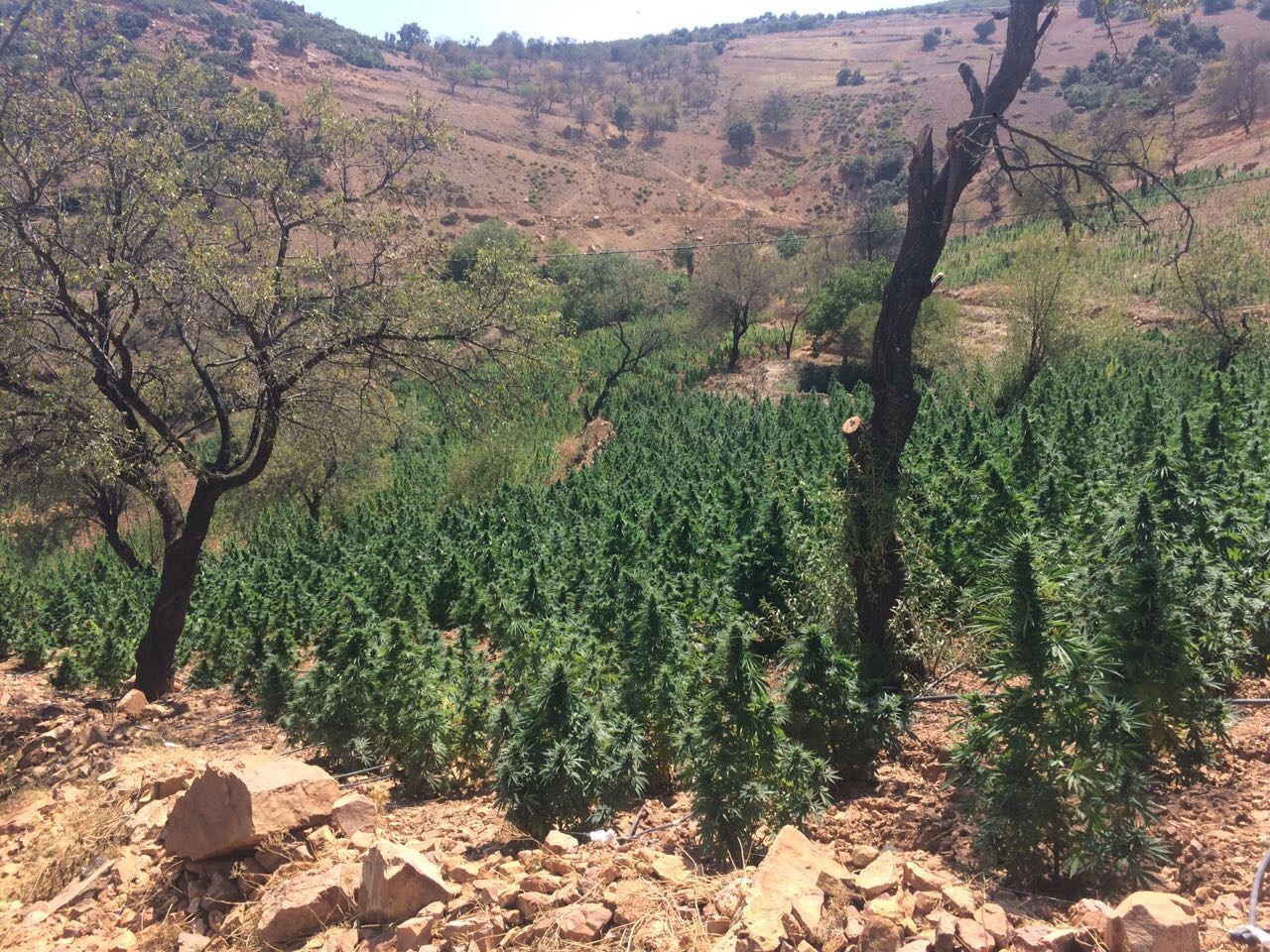
A home grower may have a hot week, an imperfect irrigation schedule or a tent with less-than-perfect airflow. Outdoor plants have to deal with changing weather. Different growers use different soils, nutrients, lighting systems and cultivation techniques. Even experienced growers make mistakes.
A variety that performs beautifully only when everything is perfect may still be interesting, but it is important to understand that limitation.
That is why we care about seeing genetics in different hands.
Once several growers cultivate the same variety under different conditions, patterns start to become visible. Some characteristics remain remarkably consistent. Others turn out to depend much more heavily on the environment than they appeared to during selection.
That information is extremely useful.
Good genetics have to survive contact with growers
Breeders naturally become attached to their work.
You spend months or years following a line, selecting plants and watching particular characteristics become more established. When the result finally looks the way you hoped, it is easy to see what you want to see.
Grower feedback is a useful correction to that.
A grower does not care how much time we spent on a breeding project if the plant does not perform.
They experience the genetics from a completely different perspective. They notice whether germination was straightforward, whether the plants developed evenly, whether the structure made sense in their grow space, whether flowering matched expectations and whether the end result justified the time and space they gave to the plants.
Sometimes that feedback confirms everything we thought about a variety.
Sometimes it does not.
Both outcomes are valuable.
We are not breeding only for expert growers
Cannabis breeding can easily become an exercise in extremes.
The highest THC figure, the most unusual colour, the strongest aroma, the heaviest resin coverage or the biggest theoretical yield can all be useful breeding goals.
But most people who buy cannabis seeds are not professional breeders.
Many are growing a small number of plants for themselves. Some have years of experience. Others are doing their first serious grow. Their environment may be good without being perfect, and their priority may simply be to grow healthy plants and harvest cannabis they enjoy.
That reality influences the way we think about genetics.
We still want exceptional plants. We want distinctive terpene profiles, strong resin production, good structures and new combinations of traits.
But we also pay attention to how a variety behaves in ordinary grow situations.
A beautiful plant that requires constant intervention may be exactly what an experienced grower wants. It is not necessarily the right choice for somebody growing two plants on a balcony.
There is room in the catalogue for both, as long as we understand what the genetics are and communicate that honestly.
Barcelona gave us access to many different kinds of growers
Being based in Barcelona exposed Seedstockers to an unusually broad range of growing styles.
Spain has long had an active cannabis cultivation culture, and Barcelona became an important meeting point for growers and people working with cannabis genetics from Spain and abroad.
For a young seed company, that was useful.
Instead of receiving feedback only through sales numbers, we could speak to people who had actually grown the plants. We could compare experiences, see finished results and understand which characteristics mattered to different types of growers.
That also helped shape an idea that remains important to Seedstockers today: there is no single definition of the perfect cannabis plant.
A grower in northern Europe may care strongly about flowering time and resistance outdoors. Someone growing indoors may care more about plant structure and efficient use of limited space. Another grower may be willing to sacrifice yield for a particular terpene profile.
Genetics have to be judged in the context in which people actually use them.
Our breeding changed, but the feedback loop stayed
The role of Seedstockers changed substantially after we became independent in 2022.
During the first years, we were mainly choosing from genetics developed or produced by others. Some small breeding projects were already taking place within our production network, but our own R&D was not yet the centre of the company.
Today the situation is almost the reverse.
Most of the new varieties we release come from our own breeding programmes, and the entire Seedstockers Superior collection consists of our own breeding work.
That means grower feedback now enters much earlier into our thinking.
We are no longer only asking whether an existing variety deserves a place in the catalogue. We can use what we learn from previous releases, alongside how Seedstockers decides which genetics are worth releasing, to influence future parent selection, crosses and breeding priorities.
If growers repeatedly tell us that a particular structure works exceptionally well, that is information we can use. If a line produces great flowers but proves too inconsistent, that matters too. If a characteristic that looked important to us barely matters to growers, we should know that.
A breeding programme should learn from the people who grow its genetics.
Awards provide another kind of feedback
Competitions can also be useful because they expose genetics to growers and judges outside our own organisation.
Seedstockers genetics have now received more than 70 awards and competition placements around the world. Those results have come from many different varieties, events and countries.
We do not treat an award as proof that a variety is perfect. A competition result represents a particular grow, a particular selection and a particular set of judges.
But repeated results across different growers and environments are interesting.
If a variety performs well when grown independently in several places, it gives us another piece of evidence that the qualities we saw during breeding can survive outside our own environment.
That is more valuable to us than a trophy on its own.
Autoflowers are a good example
Autoflowering genetics show particularly clearly why real-world testing matters.
Their life cycle is short, which leaves less time for a plant to recover from stress or cultivation mistakes. A characteristic that looks minor in a photoperiod variety can therefore have a much larger practical impact in an autoflower.
This is why speed alone tells us very little.
An autoflower may finish quickly, but we also want to know whether it establishes itself strongly, makes good use of its limited vegetative period and develops a structure that growers can work with.
Growers are very good at revealing weaknesses in this area.
They will grow the same genetics in different containers, substrates, climates and lighting conditions, often in ways a breeder would never choose for a controlled test.
That variability can look messy from a scientific perspective, but it tells us something important about how forgiving the genetics are.
The same applies to premium genetics
More ambitious breeding does not make grower feedback less important.
It makes it more important.
Our Superior collection and experimental projects allow us to work with genetics that are newer, more unusual or more demanding to develop. Madonna Triploid is an obvious example.
But technical novelty is not enough.
We can produce an unusual chromosome configuration or create a cross that looks impressive on paper, but ultimately growers still have to put those seeds in the ground.
The question remains the same: does the resulting plant justify the project?
That is where breeding and reality meet.
Our growers are much more international now
Seedstockers is still based in Barcelona, but the feedback around our genetics now comes from much further away.
Our team includes people from Europe and Latin America, and Seedstockers genetics are grown across very different climates and cultivation cultures.
That gives us a much broader view of what “good performance” actually means.
A plant grown outdoors in Germany faces different challenges from one grown in Spain. A Brazilian grower may encounter conditions that are completely different again. Indoor growers can remove much of that environmental variation, but their equipment, grow spaces and techniques still differ enormously.
We do not expect one variety to be perfect everywhere.
But the more environments in which we see our genetics grown, the better we understand what they really are.
Accessibility also means breeding for real life
Accessibility has always been part of Seedstockers.
When we started, that idea was expressed mainly through price, something we explore further in how our pricing philosophy evolved. We wanted good genetics to be available to people who did not want to spend premium money on every seed.
We still believe in that, but our understanding of accessibility has expanded.
Genetics can be financially accessible and still be frustrating to grow. A variety can look spectacular in a breeder's photographs and still be a poor choice for the average home grower.
If our purpose is to empower people to grow their own cannabis, we have to think about more than the price of the seed.
We need genetics that make sense for the people growing them, accurate information about what those genetics are, and enough knowledge and support to help growers get good results from them.
That is one reason community matters so much to us.
Growers are not simply the final customers in a breeding process.
They are part of the feedback loop.
The grow is where the genetics become real
A seed packet contains potential.
A breeding programme gives that potential direction.
But the final test happens somewhere else: in a grow room, greenhouse, garden, balcony or field where somebody who had nothing to do with the breeding puts the seed into the ground.
That person does not see the years of work behind the variety.
They experience the plant in front of them.
That is the perspective we never want to lose.
Seedstockers has changed considerably since the original version of this article was published in 2017. We now develop most of our newer genetics ourselves, our breeding programmes have become much more ambitious and the company is no longer defined mainly by low prices.
But being close to growers is still part of how we think.
The best genetics should not only impress the breeder who created them.
They should work for the people who actually grow them.
About this article
This article was originally published on 26 July 2017 under the title “Seedstockers Cheap Cannabis High Quality Genetics Seeds.”
The original version focused heavily on Seedstockers' low-price business model, bulk seed purchases and the company's access to external breeders and producers. It also described the importance of Barcelona and the feedback Seedstockers received from growers around the city.
Seedstockers became independent in 2022 and has since evolved into a cannabis genetics and breeding company. Most newer varieties now originate from Seedstockers' own breeding programmes, while the company continues to use feedback from growers in different countries and environments to better understand its genetics.
This article was comprehensively rewritten on 21 October 2026 to preserve the useful idea behind the original article while removing outdated commercial claims.