How To Protect Cannabis Plants from Heat Stress
Cannabis plants are extremely diverse and can grow in many environments. Growing indoors or outside in a hot climate that presents frequent challenges can be difficult, and oftentimes will affect the final yield and flower quality. In this article, we explain how to protect your plants, symptoms of heat stress, indoor and outdoor marijuana heat stress, and the 3 best Seedstockers’ cultivars to get you through any tropical weather!
How to protect cannabis plants from heat stress
If you are new to growing, then you may not be familiar with thermal / heat stress and how it will influence your precious plants. In the same way Cannabis plants can have negative reactions to cold and wet weather the same occurs with high temperatures, heat waves and drought conditions. It can be much harder to cool a room down than it is to heat it up, and heat stress can be devastating if not treated and a long-term solution set in place.
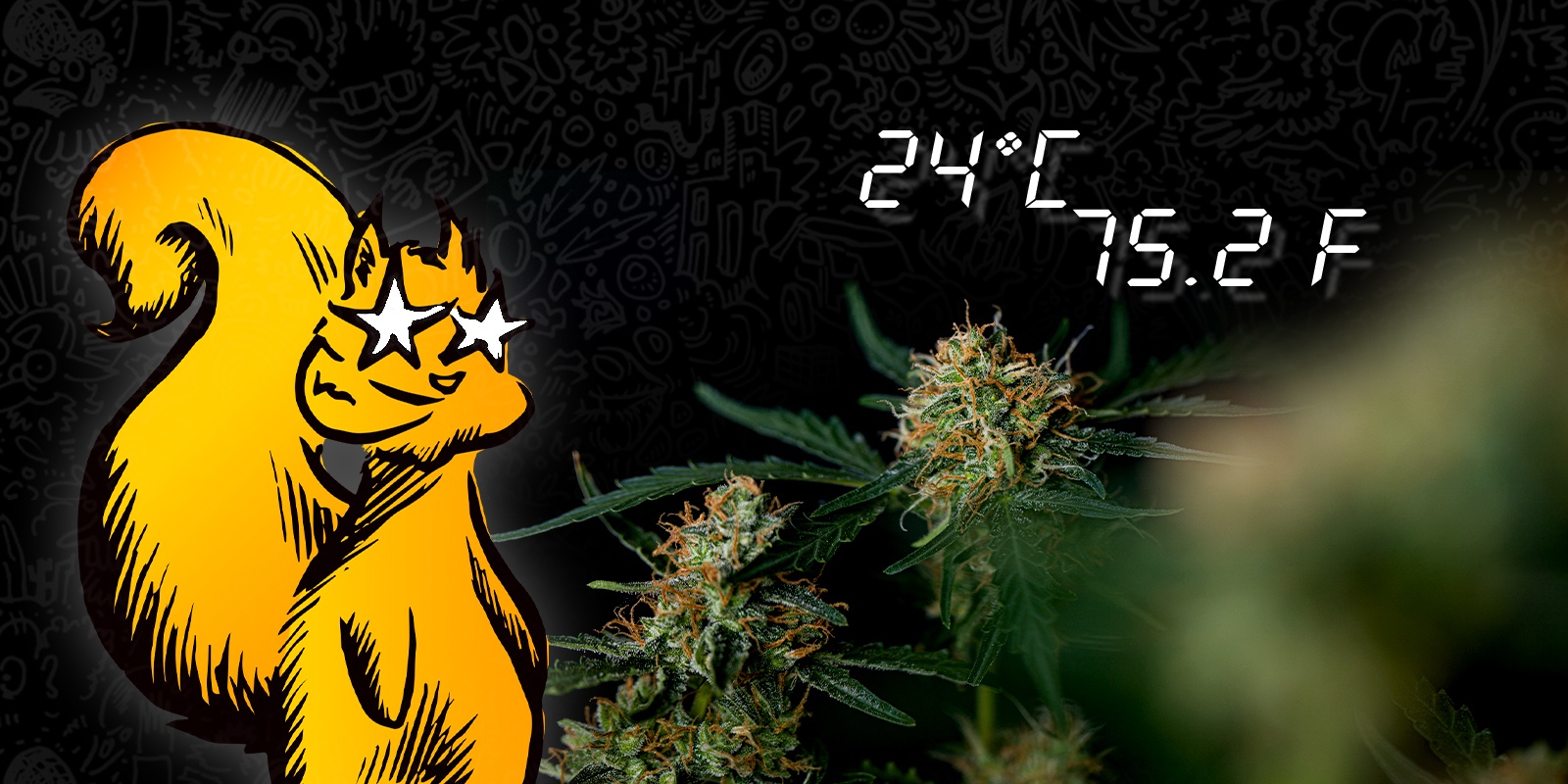
It is critical to understand that Cannabis plants will perform the best indoors when grown at 24 degrees Celsius / 75.2 degrees Fahrenheit. Depending on if the plants are in a vegetative state or flowering, the relative humidity will correspond to the preferred temperature, so for example 75% humidity during 18/6 and close to 35% humidity during 12/12.
How a grower can control these temperatures to ensure that the plants do not exceed this optimal zone, can be down to many variables. How many lights they have, efficiency of their extraction, if they are using Co2 and most importantly what the temperature of the air outside has become.
8 Symptoms of heat stress or overheating of plants
The way that Cannabis plants will use water available in the growing medium, is by transpiring through their leaves. Water is drawn up from the root zone and passed through the foliage. Transpiration occurs in the same way a human produces sweat to cool down.
When transpiration occurs with Cannabis plants, depending on the temperature, humidity levels and airflow, moisture can leave the plants rapidly causing the plants to suffer stress. The results can be plants that become dry, crispy and showing early symptoms of nutrient deficiency at primary or trace element level. Below are 8 signs to look for when diagnosing your Cannabis plants with thermal stress.
- The plant’s appearance will not be as healthy and happy as previously. The angle of the leaves may be slightly drooping. This will be evident from a distance, and when getting closer will notice many more symptoms. Large-sized plants may wilt heavily and look like they are on death’s door.
- The color and texture of the foliage will not be a vibrant green color with thick leaves. The dark green will become a lighter shade with a thinner leaf surface than before. The vibrancy and waxy texture of the healthy leaves can easily be restored.
- A closer inspection will show that fan leaves and small-sized leaves are using their energy to curl inwards, in an attempt to block light. This will typically result in each blade curling inwards from either side. The same symptom will occur with wind burn, so can be caused by wind and heat.
- Some foliage will have become totally crispy and lifeless. Normally, the biggest fan leaves will be the first to go. The lowest parts of the plants will generally become sacrificed when facing excessive heat stress. Over time, the leaves will restore back to their normal shape, so do not remove the leaves if you notice any curling.
- The root zone will reveal the state of the growing medium and how healthy the roots are. Cannabis plants that have endured drought conditions and hot winds, will suffer tremendously, causing roots to become dry, weak and limit the bacteria and fungi activity in the soil food web. Pots sat on blistering hot terraces outside will often suffer the most thermal stress.
- Stunted growth is an evident sign that not only are the plants not happy, but they are unable to resume growing at a normal pace. This will result in a slow rate of vegetative growth, and will seriously inhibit flower production.
- Resin production may be far less superior during flower production. In some cases, the trichome production may increase due to stress, however in most cases combined with dry roots, curling foliage and stunted growth, the result is a poor quality of flower in terms of yield and resin production.
- The terpenes will not have a chance to completely formulate before harvesting and due to excessive heat stress, can cause certain terpenes to become very volatile and lack essence.
How to protect your indoor grow room from heat stress
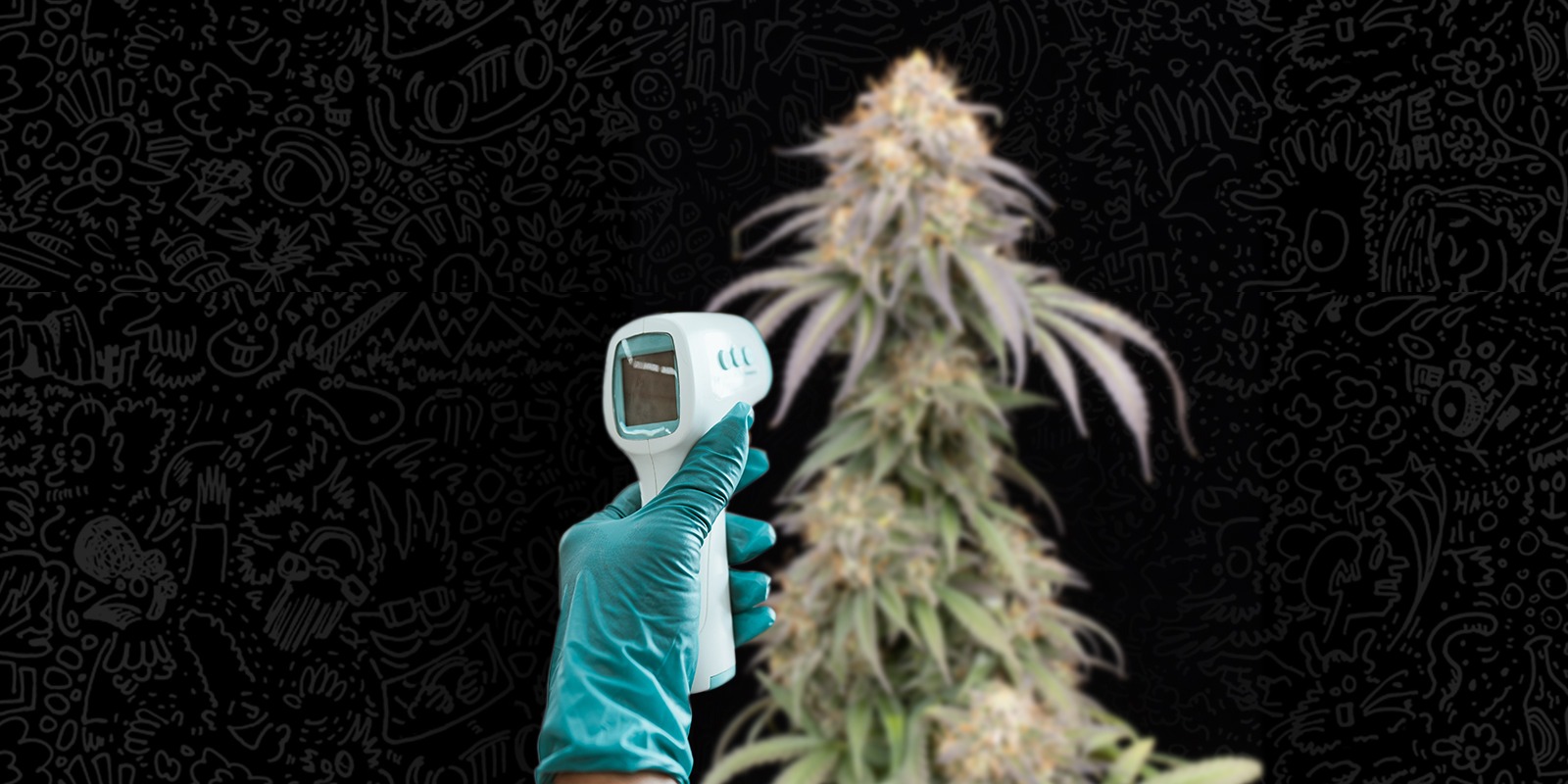
Protecting Cannabis plants from heat stress is straightforward to do, once you have the awareness of what can cause it. Growing Cannabis indoors can often be easier than outdoors, due to the fact the grower can manipulate their temperature and humidity. This can be aided with the use of temperature fan controllers and digital sensors that maintain a set temperature and humidity.
- The extraction: This refers to how much air is blown out of the tent or grow room. An essential part of any successful grow room and one of the best ways to ensure you are constantly recycling the air in and out of the tent. Poor extraction is a way to increase temperatures indoors and encourage pathogens, disease, and spider mites to infest the garden.
- Distance of the lights: One mistake growers typically make is lowering their HID grow lights to a point that may be too hot for the top of the canopy. Oftentimes this is done in an attempt to increase light coverage and intensity. The best way to make sure you have the correct distance is to use the back of your hand under the light, and to see how hot the light feels.
How to protect your outdoor garden from heat stress
There are a few different ways to combat a heat wave and high temperatures outdoors. Some of these may sound counter-productive, however in the long run will pay off massively.
- Build a poly tunnel to keep high U.V levels at bay.
- Water the plants early morning and late evenings only.
- Keep your plants in a shaded area during the hottest parts of the day.
- Build shading nets to cover from 12pm-4pm using a bamboo frame and netting..
Should I water cannabis plants that suffer from heat stress?
Once the health and vigor of a Cannabis plant have become directly affected by heat stress, with visible and clear signs, restoring the plant’s health can take some time. The best way to resolve any issues caused by heat stressed plants is to keep away from direct sunlight, high U.V levels and do not let the root zone become hot and dry. Foliar spraying your plants using a seaweed solution is a great way to restore health, and enhance the thickness and waxy appearance.
What are the most resistant Seed Stocker’s strains to temperature changes?
Santa Marta – A cross of Amnesia Haze and Santa Maria that can endure hot climate and is exceptionally resilient to heat stress.
Thunder banana – A super resistant strain that is a cross of Alaskan Thunder Fuck and Amherst Banana, that thrives under tropical weather.
Sour Diesel- A classic and extremely tough plant when grown outdoors. She can take on high temperatures and drought conditions with ease.