Autoflowering vs feminized seeds, which is better for growing cannabis?
Autoflower vs feminized seeds
When a grower plans to buy cannabis seeds, his or her choice is usually based on three basic categories: regular, feminized and autoflowering seeds. Each of these types of seeds produce plants that have their own differences in terms of cultivation, size or yield; and some are more popular than others depending on the needs of particular gardens.
That’s why you should familiarize yourself with the characteristics of each type of seed to determine which is best for you. Here we will look at the differences of each in order to help you make the right choice.
Regular Cannabis Seed
Regular cannabis seeds are seeds that are not optimized by genetic engineering to make any part of the plant’s life cycle function differently than it would in nature. Cannabis plants, by their natural pollination, produce seeds that give male or female plants. Regular seeds have about the same probability (between 50% and 60%, although this figure is an average) of producing a female plant as a male plant.
If you are looking for males for breeding programs, you might choose to quickly isolate the males in an entirely different garden or if your only intention is producing flowers, then the male plants are undesirable and should be discarded. If males are allowed to flower along side female plants, they will pollinate the females, causing them to convert their energy into seed production instead of flower and trichome production – this translates to diminished potency. Not to mention, seeds are not very pleasant to smoke and can be a pain to pick out of your stash.
Feminized Cannabis Seed
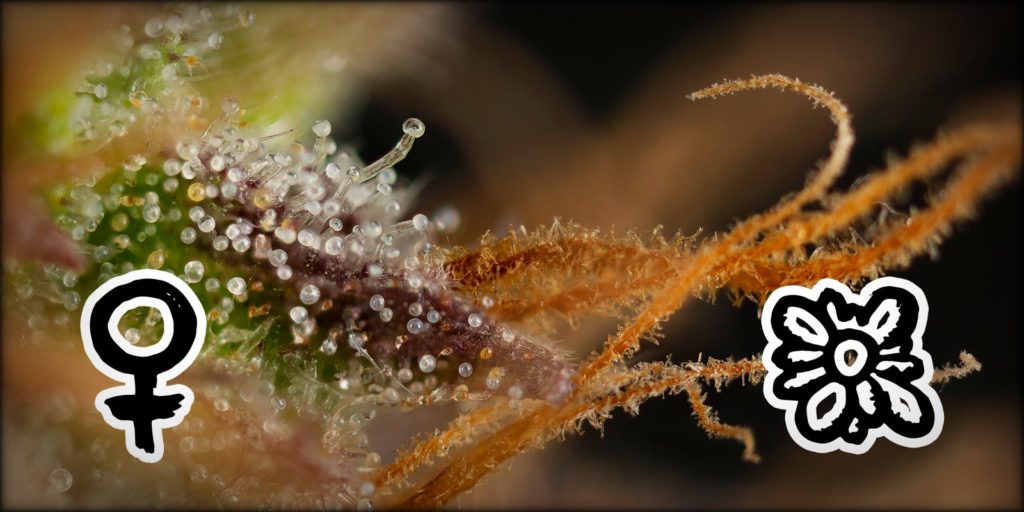
As implied, feminized seeds are intended to completely eliminate the possibility of producing male plants, resulting in plants that are genetically all female. This means that growers don’t have to worry about discarding males.
In most strains, the sex is not identifiable until the pre-flowering vegetative stage. This is why feminized seeds are so popular; as they save time and resources normally spent while potentially unwanted male plants would be growing. This also helps to prevent accidental seeding of flowers.
Photoperiod vs autoflower
For the most part, when you’re looking through a seed catalogue and see a feminized category, you are looking at photoperiodic, feminized seeds. This means that they, like regular seeds, rely on triggers from the light cycle in order to start flowering.
Non-photoperiodic seeds are also available as feminized versions.
Autoflowering Cannabis Seed
Autoflowering seeds are the easiest to use and obviously the most popular among beginner growers, since the plants are non-photoperiodic and do not require the same level of complexity in their care. While non-feminized autoflowering genetics absolutely exist, the vast majority of autoflowering seeds – and the ones you’ll find in commercial catalogues – are feminized in addition to being non-photoperiodic.
Autoflowering seeds are an innovative creation that comes from blending ruderalis genetics into modern-day Indica and Sativa hybrids. Ruderalis genetics are often what we call “ditch weed,” and come from regions of Russian and Alaska in which cannabis adapted to cold weather and different day/ night lengths, with minimum resources available. As a result, this ditch weed is incredibly resilient and non-photoperiodic, which means it flowers after about 4-5 weeks of vegetative growth, regardless of the amount of light it receives. By being crossed with modern, award winning cannabis genetics we end up with a highly potent, easy to grow, and reliable genetic that doesn’t rely on photoperiod triggers.
The first seeds of this type became popular in the 2000s and, in general, the plants were not up to par in terms of aroma, potency and yield. Since then, they have undergone many improvements and now autoflowering strains can perfectly compete in quality with their feminized or regular counterparts.
What are the differences in yield and flowering?
Growing feminized seeds ensures that there are only female plants, eliminating the unnecessary work of maintaining male plants that might eventually be discarded. This ensures a higher yield, as the available growing space is used in the most productive way. In addition, there is uniformity between plants even when production is done on a large scale.
Regular and feminized cannabis plants need specific lighting cycles to move from the vegetative stage to the flowering stage. In nature, cannabis begins to flower when the days become shorter, from the summer solstice on wards. Therefore, indoors, feminized seeds need to have the light cycle changed to 12/12 (hours of light and dark) to trigger the development of buds.
Autoflowering seeds eliminate these requirements, as they start flowering regardless of the hours of light received, between 4 and 5 weeks after germination, so their total life cycle is reduced to about 9 to 12 weeks, which is actually about the same amount of time non-photoperiodic varieties require just to flower.
Indoor vs outdoor growing
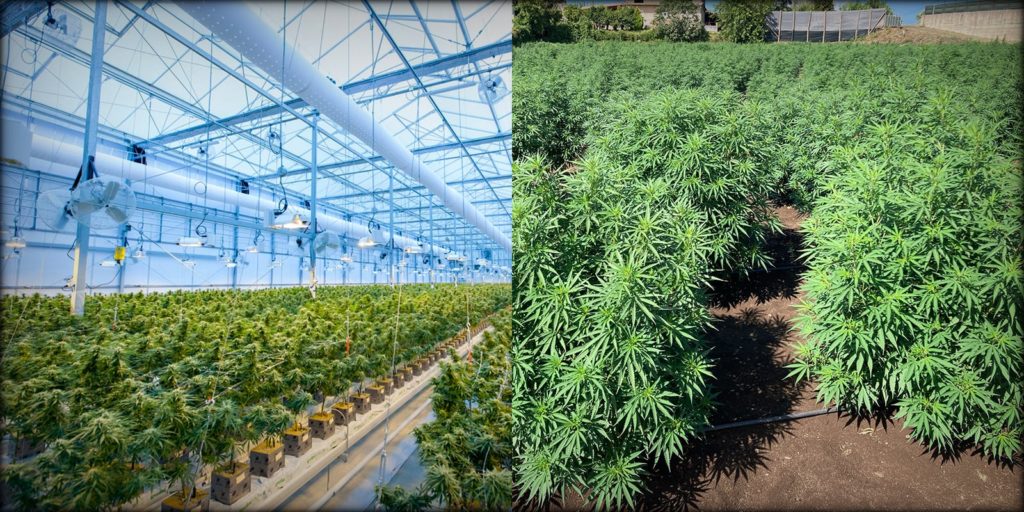
There are also differences if you grow indoors or outdoors.
Feminized (non-photoperiodic) outdoor plants, being governed by the photoperiod of the sun and are restricted to one harvest per year, unless artificial light deprivation is created. They are usually planted at the beginning of July, at the very latest, and are harvested between late September through to November.
With autoflowering plants the calendar is more flexible: since they do not depend on the photoperiod to flower, you can harvest several crops in the same place throughout March-October (even more, if you live in southern latitudes).
Indoors, feminized plants can also be programmed. As long as your plants receive 18 hours of lights on each day, they will continue to vegetate and never flower. This can be taken advantage of in SCROG style grows, and other methods of cultivation.
On the other hand, autoflowering genetics have the advantage of being able to vegetate and flower multiple plants of different ages all in the same cultivation area. This means you don’t have to keep more than one room, with different light cycles for a continuous crop cycle.
Are autoflowering plants less potent?
Originally, autoflowering plants come from the Ruderalis plant, a spectacularly low potency type of weed that produces little yield. For this reason, many growers consider autoflowering plants to be less potent than feminized plants.
Today, Autoflowering genetics have been developed through rigorous breeding programs. As a result, potent and high-yielding plants that can compete with modern day photoperiodic genetics are all over the place. In fact, there are even autoflowering genetics with the ability to outshine certain classic photoperiodic genetics.
Autoflower vs Feminized seeds
If you are still not sure what type of seed to choose, we will try to clear your doubts by explaining the main advantages and disadvantages between feminized and autoflowering seeds, autoflower vs photoperiod.
Autoflowering Seeds
As we have already mentioned, autoflowering cannabis plants grow quickly and flower faster than photoperiodic plants, allowing you to have more harvests in the same season. But this is not the only advantage:
Pros
- The plants are smaller: Due to their Ruderalis heritage, they have the added advantage of growing shorter, usually 50 to 100 centimetres, which is especially important for outdoor growers looking for discretion; or indoors, where lack of vertical space can be a problem.
- They are more resistant: Due to Ruderalis’ evolutionary adaptation to adverse conditions, they are strong, hardy plants. If you live in an area where the climate can change fairly quickly, or you are not too picky about maintaining ideal growing conditions, they are more tolerant.
- They need less nutrients: While photoperiodic strains require a complex nutritional strategy that changes throughout their life cycle, autoflowering strains can get by with a reduced nutritional regimen.
- Suitable for beginners: No need to keep an eye on lighting cycles means fewer variables and systems to keep track of in your garden.
- More forgiving in urban environments: You will not have to worry about light pollution, that is to say, it does not matter if during the night there is a street lamp on and the light falls directly on your plant. This, in a feminized plant, is a big problem.
Cons
- Lower yields: While their small size has benefits, they also offer lower yields per plant. However, per m2 of plant canopy, they can rival even photoperiodic yields since you can fit more plants in the same space.
- Vulnerable to mistakes: Although they are a good option for beginner growers, their speed is also a double-edged sword, because a mistake is very expensive, since the plant does not have enough time to recover.
- It is not recommended to make cuttings: Since an autoflowering cutting would not depend on light, it would follow the same timeline as its mother, which means it would have less time to grow, becoming a small plant with tiny buds.
- Higher lighting costs: Normally with autos you can use a light program of 18 hours and 6 hours of darkness during the whole life cycle, and some cultivators even leave their light son 22-24 hours per day.
Feminized Seeds
Below, we also discuss the advantages and disadvantages of feminized strains:
Pros
- No sexing is required: No need to worry about looking at plants in the pre-flowering stage to see if they are male or female, which saves time, labour and space. This also eliminates the possibility of cross-pollination that could occur with regular seeds.
- The size and shape is more designable: As you have a vegetative period linked to the photoperiod, the longer the time you invest in this period, the larger your plant will grow. In addition, you can form its shape to your desire by means of pruning techniques.
- Higher production and quality: Generally, a feminized plant will give you a greater quantity of flowers than an autoflowering one, at least per plant, and the buds also tend to reach higher potency in terms of flavour and terpene profile.
- Possibility of making cuttings: Autoflowering varieties can only grow from seed, while feminized plants can also grow from cuttings.
- Possibility of making mother plants: Since with the feminized plants you can lengthen the vegetative period, this will allow you to select specific phenotypes whose characteristics (speed, potency, resistance, aroma) stand out and excel.
Cons
- More experience: The photodependent varieties have a longer life cycle that requires more experience and basic knowledge to be able to sow at the right time and avoid future problems in the harvest.
- Lack of stability: You can end up with seeds derived from poor feminization processes which can produce plants that can become hermaphrodites. Therefore, always choose reputable seed banks, such as Seedstockers, that use sophisticated methods to create stable and reliable feminized seeds.
The best autoflowering strains
Our team of breeders has put all its experience in creating high quality autoflowering genetics with really special traits. That is why we are very satisfied with our catalogue of autoflowering seeds, which contains real gems like:
- The award-winning Blackberry Gum Auto, perfect for extractions and with THC levels of 22%.
- The tasty Gelato 41 Auto, which has a creamy flavour that has surprised the most demanding palates.
- The legendary Jack Herer Auto, the perfect combination of relaxing physical effects and a cerebral high that will make you feel wonderful.
- The new Bruce Banner Auto, a true monster among the autoflowering strains, highly productive and of unparalleled quality.
The best feminized strains
In the same way, Seedstockers’ catalogue is also full of options in terms of feminized seeds, highlighting both classic, old school-genetics, as well as a wide range of ‘made in USA’ varieties that bring us the best of the current North American market. Such as:
- Sour Diesel Fem, a cannabis legend that has won many followers for its delicious taste and powerful effect, with a THC content that can reach 26%!
- Gorilla Cookies Fem, the dream cross between Gorilla Glue and Girl Scout Cookies, a combo that seeks potency both in terms of yield and THC content.
- Green Crack Fem, another idolized genetics in the U.S. Robust and reliable, with an impressive resistance to both mold and pests, making it very easy to grow.
- Wedding Glue Fem, the sweetness and fruity taste of Wedding Cake, along with the incredibly pungent earthy and citrus aromas that define Gorilla Glue. What more could you ask for?