How to choose the right container for cultivating cannabis
Choosing the right pot for your cannabis plants is essential for the success of your crop. One of the vital aspects of proper plant maturation and development is a strong root system. Healthy roots are synonymous with good harvests. Let’s take a look at which pots are the most suitable for growing cannabis.

There are several types of pots to meet different growing needs. But if we simplify it, what a cannabis plant needs is a pot that favours healthy root growth. Without this, the plant will have problems retaining water, absorbing nutrients and achieving good vigour in vegetative growth. When choosing the pots for your cannabis cultivation you should consider the following parameters:
- Irrigation and drainage: Cannabis plants need a balance between being able to retain water (so that the roots do not become too dry), and not having a waterlogged substrate. Correct moisture levels in the substrate are key for plants to survive. To achieve this, it will not be enough to choose the right substrate, you will also need pots that allow good drainage so that there is no excess water in the soil. In addition, you will have to decide which system to use to collect the excess water from irrigation: saucers or trays. Normally, trays are used in hydroponic or small grow set ups in which many plants are put into a single meter squared. On the other hand, saucers are more commonly used by cultivators growing fewer, larger plants.
- Oxygenation: Cannabis plants need a good aeration in the substrate, their roots must be well oxygenated to absorb nutrients properly. Some types of containers offer better respiration of the soil.
- Size: Having too large of a container or too much substrate, can easily result in drainage issues, and can be a total waste of resources. Too small of a container, and your roots will not have enough space to grow and watering will have to be done at exhausting frequencies.
There are different types of pots specially designed for growing cannabis. Below we detail the characteristics of each one.
Types of Pots for growing cannabis
The best pots for growing cannabis are those that facilitate optimal root growth and development: the plant needs the necessary anchorage and energy for explosive vegetative growth. It is said that the size and health of the roots corresponds proportionally to the size of the plant, therefore, if you want your plants to grow healthy and strong, choosing the right pot will be a key element.
As mentioned above, there are different types of pots to suit the needs of different growers. Below we explain the advantages and disadvantages of each one.
Standard Pots
This type of pots are the most common for those novice growers who are taking their first steps and do not want to make a large initial investment. Within this category there are two types of materials:
Common plastic pots
This type of pots is generally the most used not only for cannabis cultivation but also house plants.
Advantages
- They are economical.
- Easy to handle, they are light.
- Drainage holes exist and more holes can be easily added.
Disadvantages
- There are better options for proper aeration.
- They do not insulate well, which can be a problem outdoors if temperatures rise or the sun hits the pot directly.
Common terracotta pots
Advantages
- This type of pot insulates the temperature well and are therefore a good option for certain outdoor crops in order to mitigate root zone temperatures.
Disadvantages
- They are heavy and are not suitable for indoor cultivation or for outdoor cultivation if you want to grow very large plants. For the most part, these containers are decorative and not well suited for cannabis cultivation, although they can work in a pinch.
- Normally this type of pot does not have too many holes to drain the water and it is not easy to make more due to the material (specific tools are required). Therefore, if you want to use this type of pots, you should choose those in which there are enough holes to provide the drainage that cannabis plants need.

Air Pot
Air Pots are plastic containers with dozens of holes both at the base and on the walls of the pot. With this, better aeration is achieved, which accelerates the metabolic processes of the plant.
Advantages
- Improved aeration: thanks to its multiple holes distributed throughout the pot, the roots receive large amounts of oxygen, which comes from all directions.
- It causes the so-called “aerial pruning”: thanks to the oxygenation of these pots, a more orderly root growth is generated. This phenomenon occurs because the root, when in contact with the air, stops growing, thus promoting the development of lateral roots. This promotes a more orderly root structure, which in turn promotes greater nutrient absorption.
Disadvantages
- With this type of pot you will have to water more often because they dry out sooner, also, if you do it manually, you will have to be patient and water little by little, so that the soil absorbs the water well and does not spill out of the lateral holes.
- This type of pot is a little more expensive than the common pots, although they are reusable, the initial investment will be higher.
Smart Pots
These fabric pots have revolutionized the cannabis industry with their many advantages. Today, growers all over the world (both small and large scale) prefer them to conventional pots.
Advantages
- Better drainage and aeration: these pots are made with a porous fabric that allows better drainage and good oxygenation. With smart pots, the risk of over-watering the substrate and “drowning” the plants is largely eliminated.
- Thanks to the characteristics of their material, smart pots do not retain heat as do common plastic pots, for example. They are ideal for outdoor cultivation.
Disadvantages
- Like the previous ones, this type of pot will cause you to have to water much more often because the substrate, being more aerated, will dry out sooner.
Hempy Bucket
The so-called Hempy Buckets are pots that function as a passive hydroponic installation. The irrigation drainage holes are placed on the sides about 5 centimetres from the ground, thus creating a kind of reservoir of nutrient solution at the bottom of the pot. This type of pots must contain a special substrate for hydroponics that usually consists of a base of perlite (the zone of the bottom of the pot up to the holes), and the rest coconut coir.
Advantages
- Since a little nutrient solution will accumulate at the bottom, your plants will be able to go longer without being watered. It is a system that offers great convenience for the grower.
Disadvantages
- These type of pots are designed for something called “soilless” cultivation and so required a different approach to nutrient and pH balance than soil cultivation, and are in some ways more complicated.
- These pots give little control to what is other wise a hydroponic system which requires high control for a balanced nutrient solution. While a proper hydroponic system might require an initially higher cost investment, it also will save for a lot of headaches down the road.
Size of the Pot
The proper size pot is a highly debated topic. For the purposes of this article we are going to give you a rule of thumb that will lead you to success. This said, you may find that in future cultivations you decided to augment this formula based on your needs. The formula is: 3L of soil per month of life the plant will live.
This means, that if you are growing autoflowering plants, which often finish by the end of their third month of life, a 9 -12 L pot will be absolutely adequate. On the other hand if you are vegging a photoperiodic plant outside, for an extended period, you may find that a 100L pot is the way to pull down kilos per plant at the end of the harvest season. Of course this sort of cultivation would require stepping up the size of the container as the plant grows.
If you’re growing autoflowering genetics, you should plant the seeds directly into the container it will be in for the entirety of its life. The reason for this is that autoflowering plants should not be transplanted, as the stress can cause them to freeze weed and stop their growth, something that can be fatal considering that they only have a 3-4 week vegetative period.
To some extent, the size of the pot directly impacts the size of the plant and the yield – however savvy growers know how to use smaller pots to get monster plants and monster yields.
The best pots to grow cannabis indoors
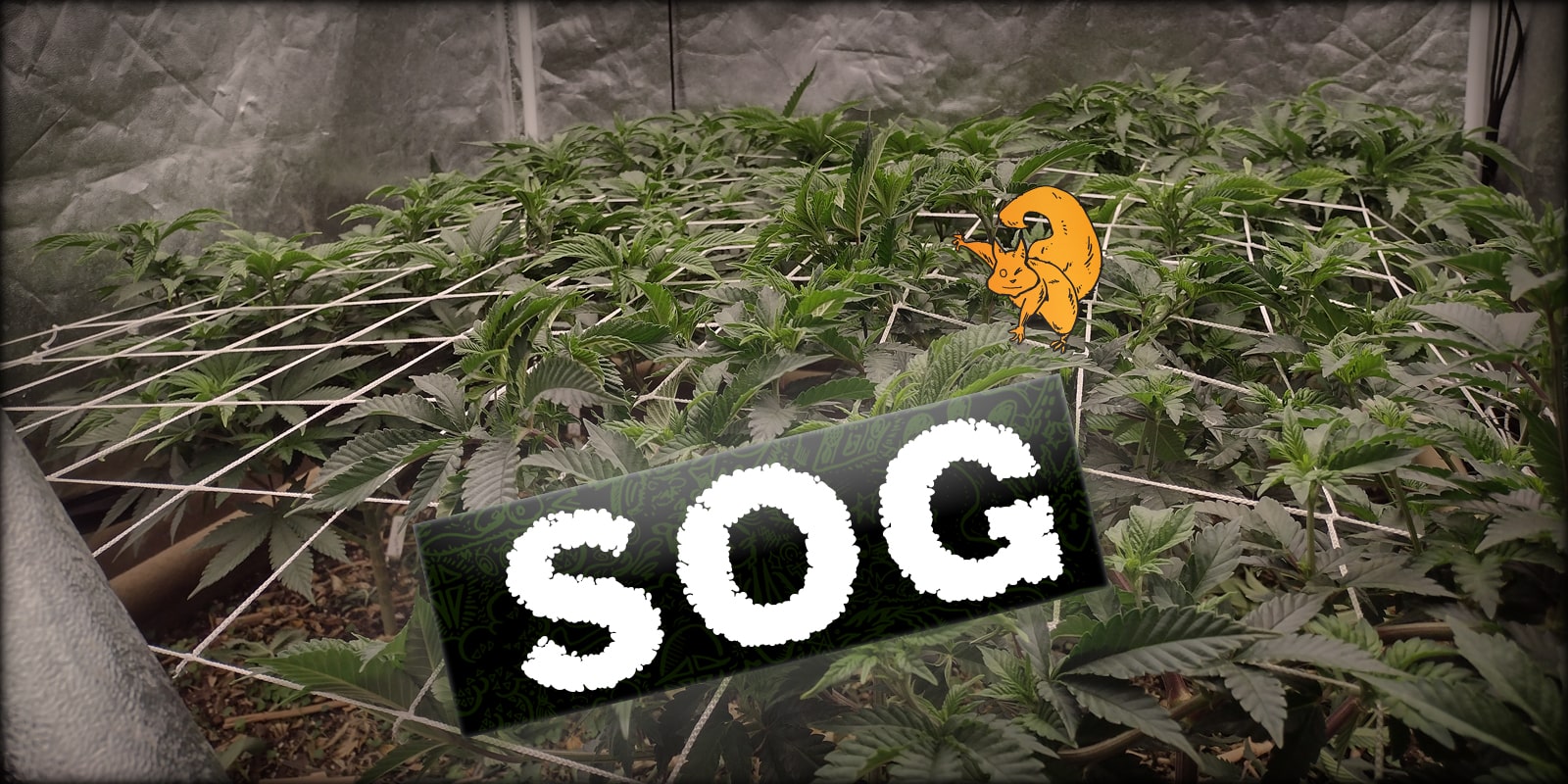
In general, those who grow cannabis indoors choose black plastic square pots because they are the best way to take advantage of space, a very valuable asset in indoor growing. This type of pots are taller than wide and their square shape allows to fit as many plants as possible per square meter; therefore, they are a tool especially used by those who grow using the SOG technique.
The best pots to grow cannabis outdoors
When it comes to outdoor cultivation, each grower has his preferences, some use giant fabric pots to get real trees at the end of the season; others, on the other hand, opt for plastic pots that are easier to move if necessary.
More than the ideal pot to grow cannabis outdoors, we should talk about the one that should NOT be used: the black plastic pots. The reason for this is that the black colour absorbs more heat. In certain times of the summer, when the temperatures are very high and the sun hits the pots directly, the roots can overheat too much and this harms the plant.
If you are going to grow cannabis outdoors in plastic pots, make sure they are always a different colour (brown, white).